Strong Digital Ecosystem
Why Every Small Business Needs a Strong Digital Ecosystem
If you’ve ever felt like your business uses too many tools, repeats the same tasks every day, or constantly loses track of information… you’re not imagining it.
The truth is simple:
A business without the right digital ecosystem works harder, wastes time, and grows slower.
A strong ecosystem, the right tools, working together, powered by automations, becomes the backbone of a modern business. It keeps everything connected, organized, and moving smoothly.
In this guide, you’ll learn what a digital ecosystem is, why it matters, how it strengthens your business, and what goes wrong when it’s not built correctly.
What Is a Digital Ecosystem?
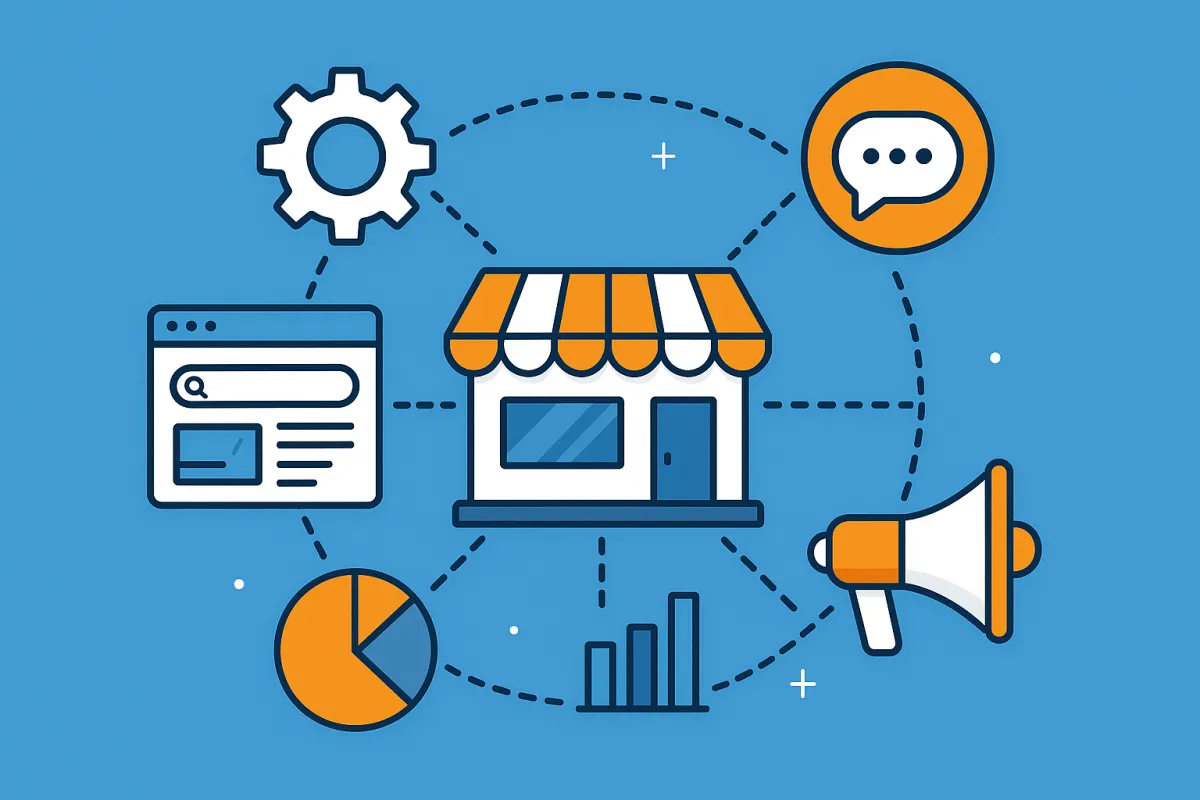
A digital ecosystem is the complete set of tools, systems, integrations, and automations your business uses to operate.
Think of it as the “engine room” of your company.
A strong ecosystem includes:
The right tools (CRM, website, booking system, communication tools)
The right integrations (tools talking to each other)
The right automations (reminders, follow-ups, workflows)
Clear processes (defined steps for customers and your team)
Everything works together instead of working in separate silos.
In simple terms:
A digital ecosystem turns your business into a coordinated system instead of a collection of disconnected apps.
Why a Strong Digital Ecosystem Matters
Most business owners don’t realize how much time is lost because their tools don’t talk to each other.
Small issues add up:
Manually entering customer information
Copying details from emails into spreadsheets
Forgetting follow-ups
Losing track of leads
Jumping between apps
A strong ecosystem removes this chaos.
It gives your business:
Structure
Organization
Clarity
Consistency
Efficiency
And the best part?
You get more time to focus on real work — not repetitive, manual tasks.
The Purpose of a Digital Ecosystem
The goal of building a digital ecosystem is to create a business that runs smoothly, even when you’re busy.
A strong ecosystem helps you:
1. Connect Everything
Your website, CRM, scheduling tools, payment systems, and communication channels all work together.
2. Automate Daily Tasks
Follow-ups, confirmations, reminders, and lead nurturing happen automatically.
3. Organize Customer Information
No more lost messages, scattered notes, or forgotten details.
4. Improve Customer Experience
People get faster responses, smoother onboarding, and fewer delays.
5. Support Growth
Your business becomes scalable, not limited by manual effort.
The Benefits of Having the Right Tools and Integrations
When everything works together, your business becomes more efficient, more organized, and more profitable.
Below are the biggest advantages explained simply.
1. You Save Hours Every Week
Automations and integrations eliminate repetitive tasks like:
Sending appointment reminders
Updating customer information
Logging conversations
Tracking job status
Less manual work = more productivity.
2. Customers Get Faster Responses
Integrated systems help you reply instantly through:
Text
Email
Website forms
Chat widget
Phone system
Fast response time increases conversions and builds trust.
3. You Reduce Errors
Manual processes often lead to:
Mistyped data
Missed leads
Lost messages
Forgotten tasks
Systems reduce mistakes and keep everything consistent.
4. Your Team Stays Aligned
Everyone sees:
The same information
The same customer history
The same notes
The same progress
No confusion. No guessing.
5. You Get Better Data and Insights
When everything connects, you gain:
Clear reports
Real-time metrics
Customer trends
Sales opportunities
Better visibility leads to smarter decisions.
What Happens When a Business Has a Weak or Disconnected Ecosystem?
This is where the real problems show up.
And they’re more common than you might think.
Here’s what happens when tools don’t work together or automation is missing:
1. Leads Slip Through the Cracks
A customer contacts you…
but their message never makes it to the right place.
This leads to lost opportunities.
2. Teams Waste Time on Repetitive Tasks
Answering the same questions
Manually following up
Copying information between systems
Time that could be used for real work gets burned on busywork.
3. Customers Get Frustrated
Slow responses, unclear processes, or missing details create a poor experience.
This affects reviews, referrals, and reputation.
4. You Lose Money Without Realizing It
Lost leads
Missed follow-ups
Slow workflows
Inefficient communication
Manual errors
All of these weaken revenue.
5. The Business Becomes Harder to Manage
Every small issue adds friction:
Tools don’t sync
Files get lost
Tasks pile up
No visibility
No structure
This makes the business feel chaotic, even when the work itself is simple.
Why the Right Ecosystem Helps You Grow Faster
When everything works together, your business doesn’t just run smoother… it scales easier.
A strong ecosystem creates:
✔ Predictability
✔ Consistency
✔ Automation
✔ Clear communication
✔ Better workflow
This allows you to:
Take on more clients
Improve your service quality
Reduce time spent on admin work
Focus on growth and strategy
Your ecosystem becomes your competitive advantage.
How to Build the Right Ecosystem (Simple Steps)
You don’t need dozens of apps.
You just need the right ones, connected correctly.
A strong ecosystem includes:
1. A Smart Website
Captures leads
Guides visitors
Collects information
Connects to CRM
2. A CRM System
Organizes customer data
Tracks communication
Manages pipelines
3. Automations
Follow-ups
Reminders
Bookings
Onboarding
4. Communication Tools
Text
Email
Phone system
Chat widget
5. Integrations
So everything syncs automatically.
Final Thoughts: Your Ecosystem Is Your Business Engine
Your digital ecosystem is more than a set of tools,
it’s the foundation that supports your entire business.
With the right setup, your business becomes:
More efficient
More organized
More responsive
More scalable
More profitable
With the wrong setup…
you waste time, lose leads, and struggle with avoidable problems.
Investing in a strong ecosystem means investing in smoother operations, better customer experience, and long-term growth.


